About Me

- Homestead Roots
- My tremendously supportive husband & I have 3 wonderful children, 1 dog, 12 laying hens, 2 dairy goats, 3 bee hives, and a 2000 sq foot vegetable garden on a small 1/4 acre lot in the city. In the center of it all is our small 1,000 sq foot house purchased in 2008 as a foreclosure that we fully renovated to host our growing family, home school adventures, and small home business (CozyLeaf.com). We have a desire to learn a path to self sufficiency finding ways to be good stewards of the resources God has given us. We want to learn to live with less as we laydown roots to our little homestead.
Showing posts with label honey. Show all posts
Showing posts with label honey. Show all posts
Monday, April 29, 2013


Sunday, May 6, 2012
Hive Entrance of a Swarm colony transfer Top Bar Hive
This is a very strong colony of bees that was brought in from one of our swarm traps. They were transferred into the Top Bar Hive a few minutes before this video was taken. They are adjusting very nicely to their new home and quickly learn the "ins and outs" to their new location.
Wednesday, May 2, 2012
Ordering a Queen Bee Online
One of the swarms that Bryan has caught this year is without a Queen...they were not making a queen for themselves, so we ordered a Queen bee to add to the colony. We purchased her online from QueenBeesForSale.com. We have been very pleased with the Corniolan bees so we wanted a Corniolan queen for that hive.
Corniolans: "It is favored among beekeepers for several reasons, not the least being its ability to defend itself successfully against insect pests while at the same time being extremely gentle in its behavior toward beekeepers. These bees are particularly adept at adjusting worker population to nectar availability. It relies on these rapid adjustments of population levels to rapidly expand worker bee populations after nectar becomes available in the spring, and, again, to rapidly cut off brood production when nectar ceases to be available in quantity. It meets periods of high nectar with high worker populations and consequently stores large quantities of honey and pollen during those periods. They are resistant to some diseases and parasites that can debilitate hives of other subspecies."
 She arrived overnight UPS in a hard case along with a few nurse bees to accompany her on the journey. I was so excited when the UPS truck pulled up...I met him in the front yard and said "Oh yeah! Is this my bee!" To which he paused and said "Your What!?". Oh oops, you didnt know you had some bees riding around next to you all day! I just said Thank you and went on inside.
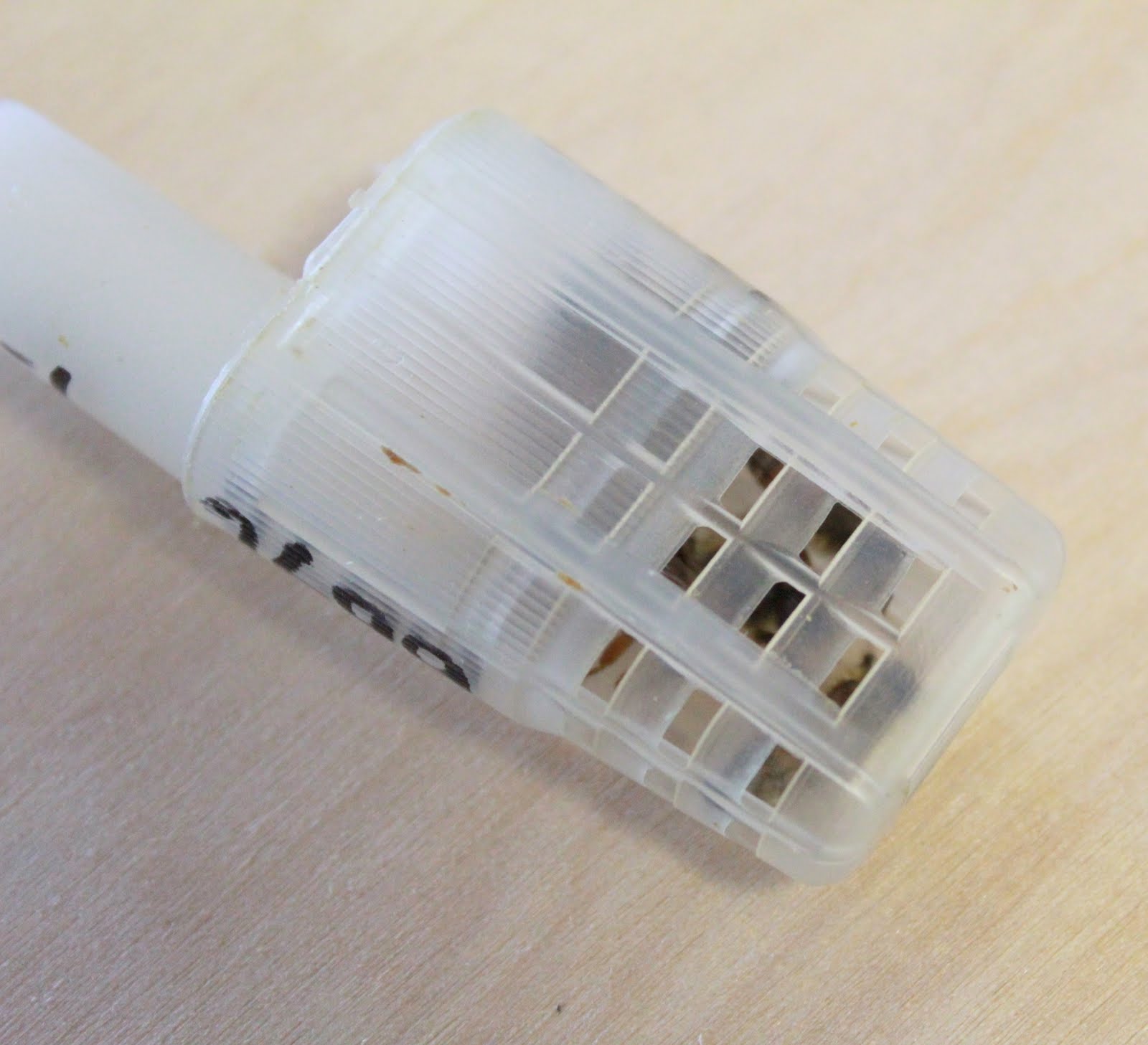 This container was inside the UPS mailer...so I opened it on up to check and make sure everyone arrived safely and unharmed. The while tube coming out of the top of the cage is full of soft candy. This way the bees from the new colony can eat through the candy to release the queen slowly into the hive.
Here she is in the hive getting to know her new colony. 

Saturday, August 20, 2011
Monday, August 15, 2011
Hive Inspection
 Taking a look at the busy busy bees! The bees are doing great and are pretty much the only thing still thriving throughout the terrible heat we just experienced!
 I love seeing the new wax they are forming in an impressive amount of time, as well as the fresh capped honey!!


Friday, July 8, 2011
Welcome to the back 40...feet
Welcome to "the back 40" (as we call it)...I wish it were the back 40 acres, but its just the back 40 feet! Bryan built a cute picket fence and walkway in front of the garden to help section off the garden and bees from the rest of the yard.

We have planted 1 bed of beans that is doing fabulous and are getting ready to plant several more beds of beans as a fall crop. I love the various beans we have coming up. We planted a variety of colors so when the kids go exploring for beans they get to find yellow, purple and striped beans instead of just regular green beans...although they are tremendously fun to find as well!


Once the busy time of goat milking is done in the morning our backyard quickly becomes a very peaceful place to relax! The bee hives are tucked into the corner of the garden bringing thousands of pollinators quickly into our garden as well as a growth of fresh honey :) You can sit back and hear the peaceful hummmm of the workers comes from their hives. Then glance to the other side of the yard and see Peaches and Poppy relaxing after their morning milking. They love spending the cool breezy morning relaxing beside their bin of alfalfa while the chickens peck around the yard finding little "protein treats" (bugs)! Its quite a peaceful time of day! I fully enjoy the relaxation of watching my "backyard work for me". The garden is growing, the bees are buzzing around pollinating and storing up honey, the goats are "replenishing their milk supply", the chickens are laying eggs and being a fabulous bug pest control, and the chickens and goats are turning the compost pile as well as "producing compost" to enrich the soil!

It has been a tremendous amount of work to get our backyard to this level of productivity...but we have no intention of stopping here!! We are continually trying to find new ideas to put our little plot of land to work!

The front 3 beds are now empty after harvesting the leafy greens (arugula, lettuce, and spinach) and peas. We prepped those beds to plant more bush beans and here soon we will plant our fall crop of beans in those beds.
Then we have 1 row of tomatoes, 1 bed of beans, and 2 beds of tomatoes.

Last year we planted a very wide variety of vegetables, all for the purpose of finding out what we like to grow and like to eat. Then after realizing there are some things we are terrible at growing we decided to limit our variety and use the "barter system". We can grow beans and tomatoes well and it is easy to trade those veggies with people who grow other vegetables well. Then of course we had to plant a few herbs for fresh garden herbs. We also have 1 row of quite a few different varieties of peppers and I am anxious to experiment with new recipes!

Taste the Rainbow!! Our tomatoes are taking off!! We planted a variety of colors and sizes and have already harvested a dozen pounds of tomatoes...that doesn't even count what Addie and Henry have eaten while standing out in the garden "harvesting".

We have 2 beds of tomatoes...its our "wall of tomatoes". I can not wait for these fresh balls of delightful flavor to flow out of the garden!! I have alot of canning I want to do as well as sun drying! We sundried several dozen pounds of tomatoes last year (which only ends up being a few pounds of dried tomatoes) and they were extremely fun to savor during the winter months! Sundried tomatoes are fabulous to toss into a winter pasta or salad...I plan to make much more this year!!


I used t-posts and cotton string to make my wall of tomatoes and so far it has done quite well. Now that the tomatoes are growing and branching out I can see that the weight of the tomatoes might be a little heavy for the thin cotton string I selected. I tied up some extra rounds of string to make sure the wall wont collapse under the weight and pressure from the plants. Last year I used some vinyl twine that held up really well but I Wanted to go with a string that would be compostable and I sure hope the walls don't collapse with the stretching of this cotton string! This method easily contains the tomatoes and helps these 8 foot tall plants have somewhere to go as they grow taller and taller. Last year we had tomato plants well over 10 foot tall by the end of the season.
I hope everyone's gardening adventures are going well!! I would love to hear about your garden, animals and harvest!
Monday, July 4, 2011
First Taste of our Capped Honey

 While Bryan was inspecting his bee hives, he pulled out a few honey bars and let us all have a taste. Freshly capped nectar does not taste like honey that you will find in the store. It has the same texture as the honey we all know, it slightly tart but very fresh and smooth. The bees cap the cell and over time it will become sweet honey. Putting the tip of your finger into the capped cells will bring out this delightful little treat!
Extremely fresh and local honey!


Preparing Top Bars for Bee hive
 First you need to collect all your boards. They can be anywhere from 1 3/8" to 1 3/4" depending on the bees. We purchased 8 foot 1x2 boards to cut down (which are 1 1/2"). Cut the boards to the top size of your bee box.
  Pull your cotton string tight across the center of your board and clamp each end so the string stays in place while you apply the wax line.
 At this point you are ready to melt the wax onto your cotton string line. We have tried several methods to get a good even wax line and the best and quickest method is to use a blow torch on low.

 Clip off the end of the string, toss the board into the pile, and start the next one!
 The top bars will all lay side by side on top of your bee box (wax side down).
Within a matter of days your bees will start building their own comb and storing up honey!


Thursday, August 26, 2010
Bee swarm removal

- "Swarming is the natural means of reproduction of honey bee colonies. A new honey bee colony is formed when the queen bee leaves the colony with a large group of worker bees, a process called swarming. In the prime swarm, about 60% of the worker bees leave the original hive location with the old queen. This swarm can contain thousands to tens of thousands of bees. Swarming is mainly a spring phenomenon, usually within a two- or three-week period depending on the locale, but occasional swarms can happen throughout the producing season." - as stated by the trusty Wikipedia!
 In this case, Bryan found a strong hive that was located inside the wall of someones barn. They didnt know how long the hive had been there, but once the wall was cut out it was obvious they had taken up residence there for at least a year if not more. Before digging in, Bryan and Nate took a look at the situation to get a better idea of where to start cutting out the outer wall.
  Nate gives the "thumbs up" and they are ready to get suited up!
 After taking off board after board they could see the hive was very well established and going strong!
 Now that they outer wall is out of the way they can start removing the honeycomb. There are different methods of bee removal but Bryan and Nate chose to slowly remove the comb piece by piece bringing bees along with it. Once the comb was safe in the boxes they were able to go back and brush off any remaining bees and gently put them into the box with the comb as well.


Subscribe to:
Posts (Atom)